
Western Red Cedar vs Composite Decking: What’s Right For You?
When planning a new deck, builders and homeowners often face the same question: natural wood or composite? Over the past two decades, composite decking has grown in popularity, but natural wood such as Western Red Cedar remains one of the most trusted materials for outdoor construction.
The Natural Advantage of Western Red Cedar
Western Red Cedar has been used for outdoor construction for generations. It has a significant track record of durability, beauty, and natural resistance to decay. There’s a reason that despite an increasingly competitive landscape, cedar continues to be a preferred choice for decks, fencing, and outdoor structures across North America and beyond.
One of cedar’s key advantages is its natural resistance to moisture, rot, and insects. Western Red Cedar contains natural oils and extractives (or tannins) that help it perform well in exterior environments without chemical treatment. This makes cedar particularly appealing for homeowners looking for a natural building material with proven longevity.
Cedar is also significantly lighter and easier to work with than most composite products. Builders often prefer cedar because it cuts cleanly, installs easily, and requires fewer specialized tools. For contractors working on tight schedules, that can translate to faster installation times and lower labor costs.
From an aesthetic perspective, Western Red Cedar offers a warm, natural appearance that many homeowners still prefer over manufactured alternatives. Its rich chocolatey tones and distinctive grain patterns give each deck a unique character that simply can’t be replicated by synthetic materials. There’s no replacing real wood!
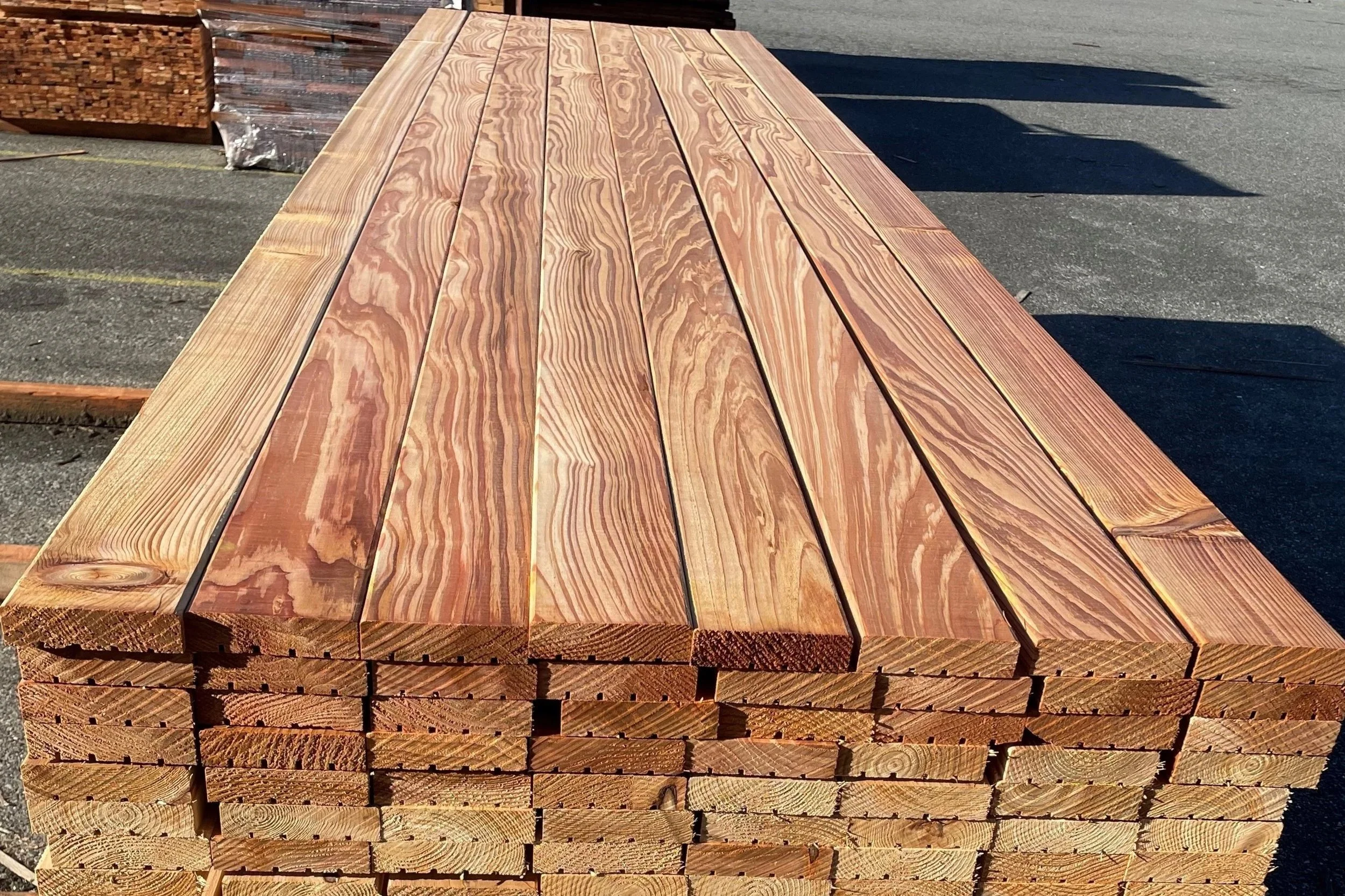
2×6 Kerf Back Decking
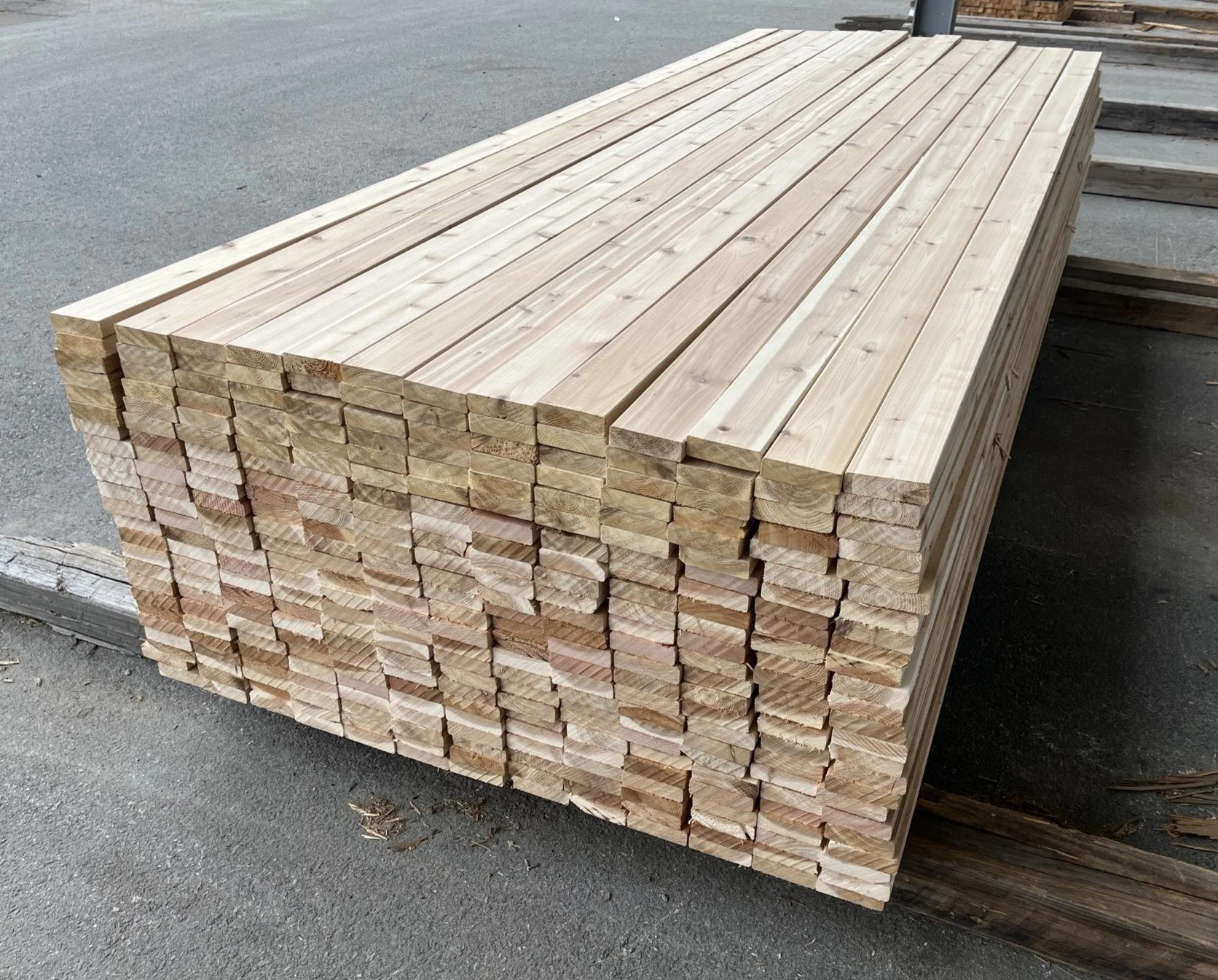
5/4×4 Radius Edge Decking - Architectural Knotty (AK)
The Consistency of Composite Decking
Composite decking products are made from a blend of recycled wood fibers and plastics. These boards are engineered to provide a consistent look and are designed to minimize maintenance requirements.
One of the biggest selling points of composite decking is that it doesn’t require staining or sealing. Its appeal is in its “install once and forget about it” nature, as it doesn’t require the regular maintenance often associated with traditional wood products.
Composite boards also offer a very consistent color and appearance, since they are manufactured rather than naturally grown. Although the boards lack character, this can be appealing for projects where uniformity is a priority.
Decking Considerations
That being said, composite decking can present some practical challenges for builders. The material is typically heavier than cedar, which can make handling and installation more labor-intensive. Composite boards may also require specialized fasteners or hidden fastening systems, which can add to installation complexity.
Another common consideration is heat retention. Composite decking tends to absorb and retain more heat than natural wood, which can make deck surfaces noticeably hotter under direct sunlight.
Western Red Cedar, on the other hand, has its own considerations. Cedar decks benefit from periodic cleaning and refinishing to maintain their color and extend their lifespan. Some homeowners may also choose to apply stains or protective finishes every few years, while others prefer to let cedar naturally weather to a silver-gray. Composite decking generally requires less ongoing maintenance, however cleaning is still necessary to keep surfaces free from dirt, mold, and mildew.
One advantage cedar holds is sustainability, which can be a major consideration in material selection. Western Red Cedar is a renewable natural resource harvested from responsibility managed forests across the Pacific Northwest. As a natural wood product, cedar stores carbon throughout its life and requires relatively low energy to process compared to many manufactured materials. In addition, being a natural product, Western Red Cedar can be reused or easily broken down and recycled.
Composite decking often incorporates recycled materials, however the manufacturing process to create composites requires significant energy and relies heavily on plastic components, which are derived from non-renewable sources. Due to this, composite decking can also be a difficult material to break down, and typically cannot be recycled as is.
For many environmentally conscious builders and homeowners, the use of a natural, renewable building material remains a compelling reason to choose cedar.
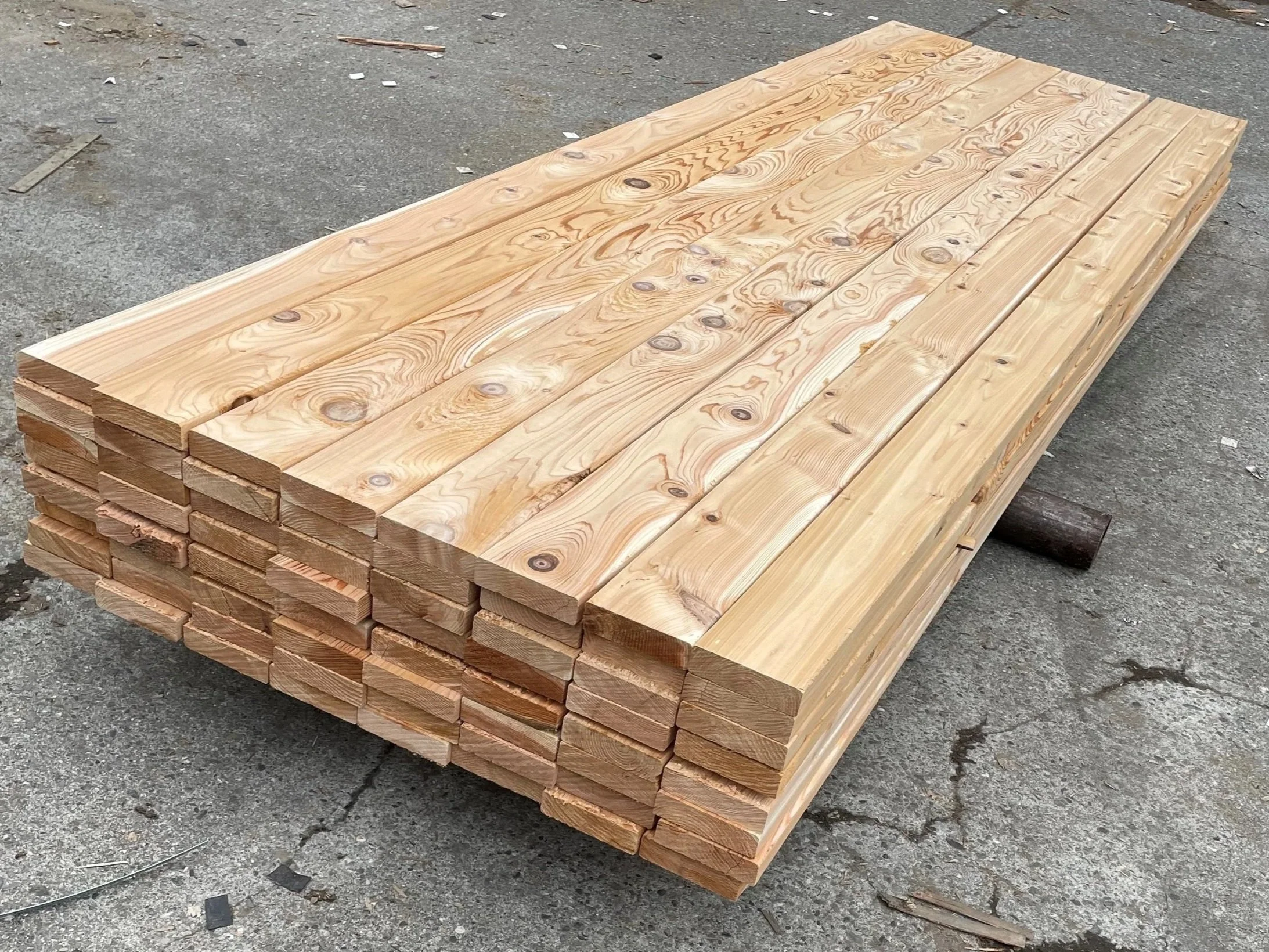
2×6 S4S Eased Edge Decking: Character on Display
Choosing the Right Decking Material
Ultimately, the choice between Western Red Cedar and composite decking depends on the priorities of your project. Builders and distributors should consider:
Desired Appearance
Installation Efficiency
Maintenance Expectations
Environmental Impact
For projects where natural beauty, workability, and sustainability are top priorities, Western Red Cedar continues to be a leading option. For homeowners seeking a more uniform look with reduced maintenance, composite decking may be preferred.
By understanding the benefits and drawbacks of both materials, builders and distributors can better guide customers towards the decking solution that best fits their needs.
Have questions about why we think Western Red Cedar makes the best decks? Please reach out.