
Understanding Western Red Cedar Grades: What Buyers Should Know in Today’s Market
In today’s Western Red Cedar market, supply conversations often dominate the headlines. Fibre availability, policy decisions, and trade dynamics all influence production and pricing. But beyond overall supply, one factor continues to shape purchasing decisions in meaningful ways: grade selection.
In our recent article on What’s Really Driving Western Red Cedar Supply, we explored how fibre availability influences the broader cedar market.
This article builds on that foundation by examining how Western Red Cedar grades are determined, why availability can shift, and what buyers should consider when planning purchases in today’s environment.
What Do Western Red Cedar Grades Actually Mean?
Western Red Cedar grades are primarily based on appearance characteristics rather than structural performance alone. Grading standards evaluate factors such as knot size and frequency, grain quality, and overall visual consistency.
At a high level:
Clear grades contain little to no visible knots and are typically selected for projects where a refined, uniform appearance is important.
Select Tight Knot (STK) and other knotty grades include sound, tight knots and are often chosen for applications where natural character is part of the design.
Grade recovery is closely tied to log quality. Clear material must be cut from higher-quality portions of the log, which influences both yield and availability. Knotty grades generally allow for greater recovery from a broader range of logs.
For buyers, the key takeaway is simple: grades are about aligning appearance expectations with the intended application.
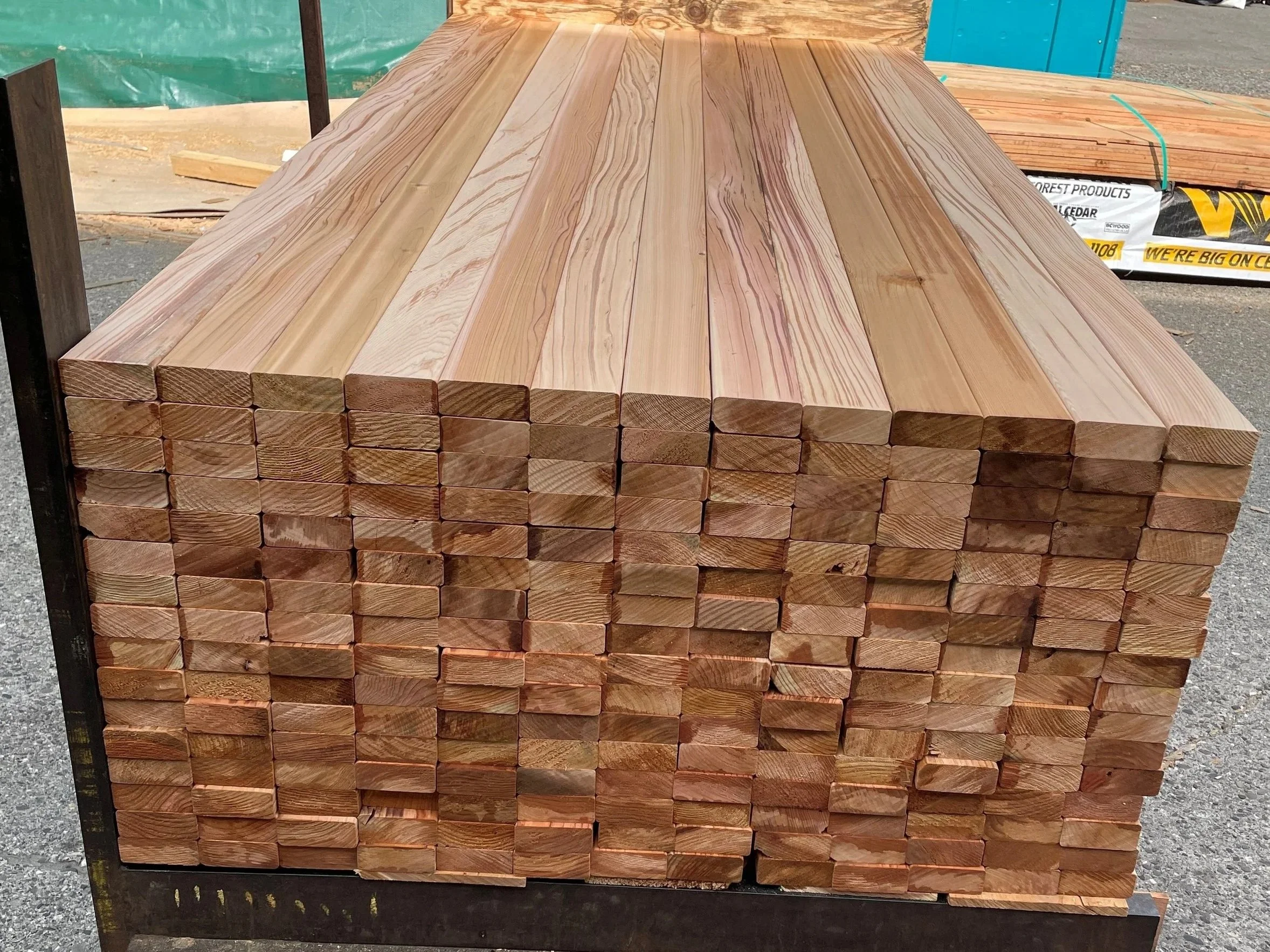
2×4 S4S - Clear
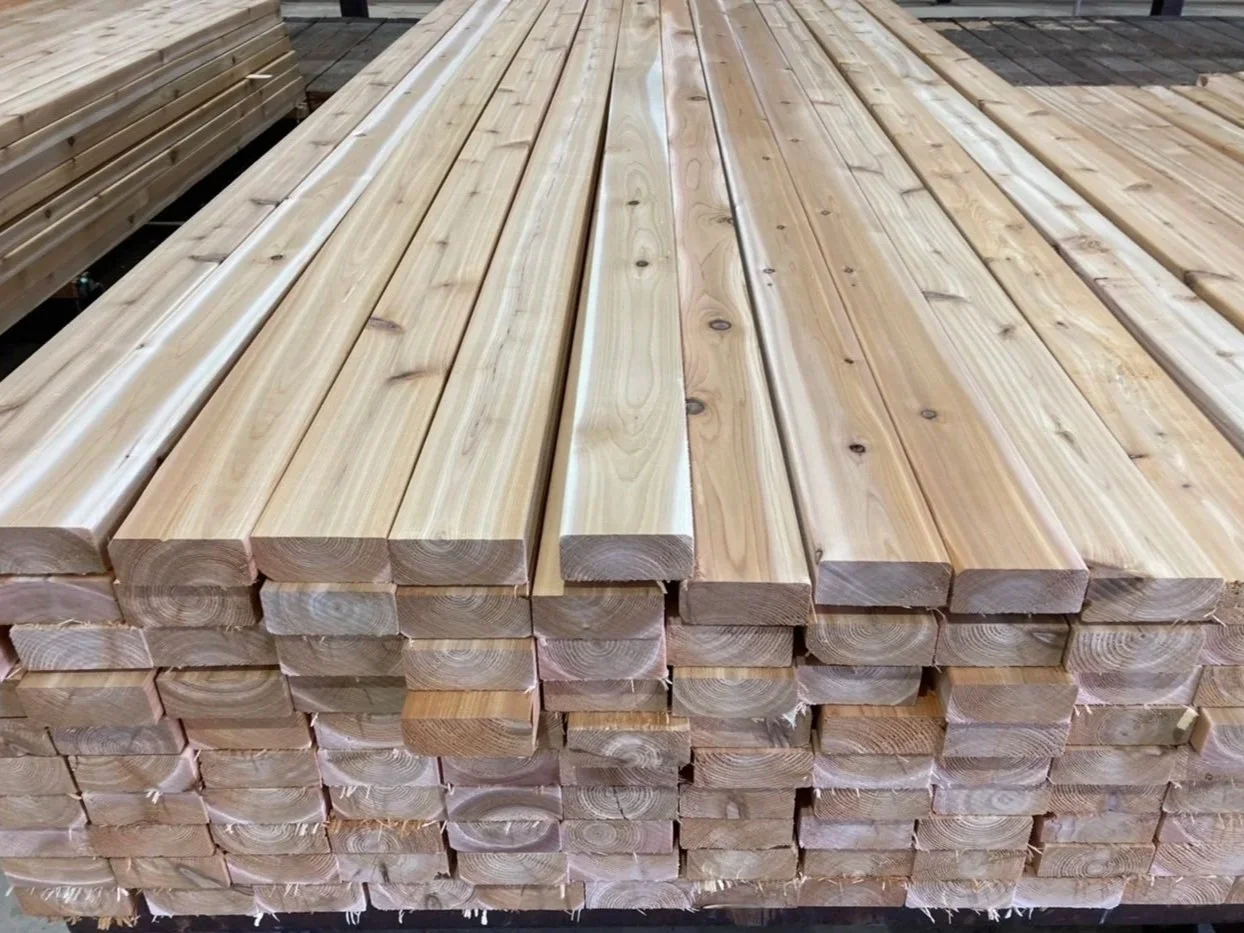
2×4 S4S - Architectural Knotty (AK)
Clear vs. Knotty: Why Availability Shifts
One of the biggest misconceptions in the cedar market is that grade availability is fixed. In reality, it fluctuates based on fiber inputs and log mix.
Changes in harvest patterns, log sourcing, or fibre access directly affect how much clear material can be recovered, as clears are more dependent on specific fibre characteristics. These primarily develop from old-growth, coastal logs which are becoming less and less available every year. Knotty grades, on the other hand, often remain more readily available because they allow mills to optimize recovery across a wider spectrum of logs. Simply put, when log quality shifts, so does the proportion of grades coming out of the mill.
This dynamic connects directly to the broader supply discussion. As outlined in our cedar supply overview, shifts in fibre access influence not only total production volume but also the mix of grades available in the marketplace. Understanding this relationship helps buyers plan more effectively and avoid unexpected adjustments during quoting or fulfillment.
How Grade Impacts Price
Grade selection also plays a meaningful role in pricing structure. Clear grades typically command premium pricing because:
They require older-growth, costal logs that may be less abundant.
Yield recovery is lower compared to knotty grades.
Additional sorting and processing are often necessary.
In contrast, STK and knotty grades generally provide more flexibility in yield and production, which can translate into more moderate price positioning depending on market conditions.
That said, pricing decisions should be guided by application requirements. Over-specifying a high appearance grade for a project that doesn’t require it can increase costs unnecessarily, while under-specifying can create challenges with visual expectations or resale. To ensure accuracy, communication is key.
When buyers communicate application needs clearly, including profile, moisture requirements, and grade expectations, production at the mill level can be planned more efficiently and accurately. This proactive approach supports smoother fulfillment and better project outcomes, helping balance performance, appearance, and budgets.
Why Grade Planning Matters More Today
As fibre conditions evolve, grade dynamics deserve more attention than ever. Variability in fibre inputs influences not only overall supply but also grade mix. Production scheduling and project timelines intersect directly with these shifts. Buyers who confirm specifications early, secure project-based purchase orders, or establish reorder programs often experience greater predictability.
Rather than reacting to grade changes, proactive planning allows buyers to anticipate potential shifts and align purchasing strategies accordingly. Grade selection becomes part of broader inventory planning rather than a last-minute decision. Customers are encouraged to ask questions such as:
What is the end-use of the lumber product I’m looking to purchase?
Based on use, what grade or grades will work for the application?
Partnering for Smarter Cedar Planning
At West Bay, Western Red Cedar has been our sole focus since 1988. With owned sawmills and remanufacturing facilities across Washington and Idaho, we produce cedar from logs through to finished lumber.
That vertical integration allows us to monitor grade yield, manage production scheduling, and provide clearer communication around availability. By controlling the process from log sourcing through final manufacturing, we’re able to support customers with consistent quality and dependable timelines by lining up supply to cut for their needs.
If you’re planning upcoming projects or evaluating your cedar inventory strategy, our team is ready to discuss grade availability and production planning in greater detail. Connect with us today!